

Affiliate disclosure: This post contains affiliate links. If you buy through them, I may earn a small commission — at no extra cost to you. I only recommend pieces I'd point a friend to, and my editorial opinions are my own. Full disclosure here.
If a metal earring leaves your earlobe red, itchy and weepy, or a ring turns the skin under it into an angry rash, you almost certainly have a nickel allergy — the most common contact allergy there is. The American Academy of Dermatology says more than 18% of people in North America are allergic to nickel, and once you're sensitized, it's for life. The maddening part is that the word plastered across most "hypoallergenic" jewelry — including a lot of so-called surgical steel — doesn't actually mean nickel-free. So as a former cosmetic chemist, let me draw the one line that matters for a confirmed allergy, then rank the best nickel-free jewelry of 2026 by what the metal really is.
Key Takeaways
- "Nickel-free" and "nickel-safe" are not the same thing. Truly nickel-free metals (titanium, niobium, solid yellow gold, platinum) contain no nickel at all. "Nickel-safe" 316L surgical steel does contain nickel — it just releases very little. For a confirmed allergy, you want nickel-free.
- Best for a confirmed/severe allergy: Blomdahl — pure medical-grade titanium (or metal-free plastic), no coating to wear through.
- Best everyday value for most sensitive skin: Stylr — 316L surgical steel, nickel-safe and affordable, with the honest caveat that it isn't nickel-free.
- Watch the white gold and the plating. Solid white gold is often alloyed with nickel; gold-plated pieces can expose a base metal as the layer wears. Both are common ways an "allergy-safe" purchase goes wrong.
The distinction that actually solves a nickel allergy: free vs. safe
This is the whole guide in one idea, and it's the thing most "nickel-free jewelry" articles quietly blur. There are two completely different claims hiding under the same friendly language:
- Nickel-free means the metal contains no nickel. Pure titanium, niobium and solid 14k+ yellow gold are nickel-free because there's simply no nickel in them to react to. This is what a confirmed allergy needs.
- Nickel-safe (or "hypoallergenic") usually means the metal contains nickel but releases it slowly. 316L surgical stainless steel is the classic example — it's about 10–14% nickel, bound tightly in the alloy, and it leaches out at very low levels.
The European Union regulates exactly that release rate. Under the EN 1811 test (jewelry soaked in artificial sweat), a piece worn in a piercing may release no more than 0.2 micrograms of nickel per square centimeter per week, and other prolonged-contact items no more than 0.5. Surgical-steel brands lean on this number: Studex, for instance, states plainly that its steel "contains nickel" but that "the nickel release rate for our earrings is well below the allowable value." That's a real, regulated safety claim — and it's why surgical steel works for the large majority of "sensitive" skin. But "below the legal release limit" is not the same as "no nickel," and for someone with a genuine, diagnosed allergy, even a low release can be enough to flare. If that's you, don't split hairs on release rates — buy a metal with no nickel in it at all.
The AAD's own safe-metals list reflects this spectrum: it recommends "surgical-grade stainless steel, 18, 22, or 24 karat yellow gold, pure sterling silver, platinum, [and] titanium." Notice that titanium and high-karat yellow gold are the truly nickel-free ends of that list — and that's exactly where my top picks land.
Best nickel-free jewelry at a glance
| Brand | Material | Truly nickel-free? | Best for | From |
|---|---|---|---|---|
| Blomdahl (#1) | Pure medical titanium / plastic | Yes | Confirmed / severe allergy | $38 |
| Tini Lux (#2) | Pure medical titanium | Yes | Titanium with style | $70 |
| Stylr (#3, best value) | 316L surgical steel | No — nickel-safe | Everyday value, mild sensitivity | $36 |
| Mejuri | Solid 14k yellow gold | Yes (yellow gold) | Premium, forever pieces | $68 |
| Studex | 316L surgical steel | No — nickel-safe | Budget starter studs | ~$10 |
| Pavoi | 14k gold-plated brass / silver | Brand-stated; plating finite | Budget gold look | $15 |
Niobium belongs near the top of this list too — it's a pure, biologically inert metal that's always nickel-free. I cover where to buy it in the picks and buying guide below.
1. Blomdahl — best for a confirmed or severe nickel allergy
Blomdahl Pure Medical-Grade Titanium / Medical Plastic
Best for a confirmed or severe nickel allergy. Pure medical-grade titanium with no plating to wear through, dermatologist-developed and made under medical QC — plus a genuinely metal-free plastic option for the most reactive skin. The look is more clinical than fashion-forward.
Check price at Blomdahl →If you've actually been diagnosed with a nickel allergy — or your skin reacts even to "surgical steel" — stop guessing and buy pure titanium, and Blomdahl is the one I'd hand a dermatologist's patient. It's pure medical-grade titanium with no coating over it, "designed in consultation with skin specialists," made in Sweden under ISO 13485 medical quality standards. The brand's language is exactly what an allergic shopper wants to read: its titanium earrings are "safe, stylish and completely nickel-free." Even better, Blomdahl is the rare brand offering a genuinely metal-free medical-plastic option for the most extreme sensitivity — the safest possible choice for a freshly pierced or hyper-reactive ear. Silver Titanium Ball studs are $38.
The honest trade-off is aesthetics: this is medical jewelry first and fashion second. The catalog skews toward simple studs and small hoops in a clinical-clean style rather than statement pieces. But for the one job that matters here — touching reactive skin without setting it off — nothing on this list is safer.
- Pros: pure medical-grade titanium, no plating to wear through; "completely nickel-free"; dermatologist-developed; ISO 13485 medical QC; a true metal-free plastic option.
- Cons: clinical, utilitarian styling; narrower design range than fashion brands.
2. Tini Lux — best nickel-free titanium with style
Tini Lux Pure Titanium
Best titanium with style. Pure titanium with no nickel and prettier designs than most medical brands. The exact titanium grade is not published on-site, but the metal itself is the right one for allergic ears.
Check price at Tini Lux →If you want titanium's safety without the medical-supply look, Tini Lux is the answer: pure titanium in genuinely cute, current designs, with a brand built specifically around metal allergies. Its pieces are labeled "PURE TITANIUM," and the brand explains the metallurgy correctly — titanium and niobium are "always nickel free" because they're pure metals, not alloys. Sofia Studs are $80 and several hoop styles start around $70. It's the pick for someone who reacts to nickel but doesn't want to dress like they're heading into surgery.
One transparency note, because it's the kind of thing I check: Tini Lux says "medical-grade titanium" but doesn't publish the exact ASTM grade on the product pages the way a few medical brands do. The metal is still the right one — pure titanium has no nickel to release — but if you want a named standard on the box, that's where a brand like Blomdahl edges ahead.
- Pros: pure, nickel-free titanium; stylish, current designs; allergy-focused brand; also explains niobium honestly.
- Cons: exact titanium grade not stated on-site; premium pricing versus steel.
3. Stylr — best everyday value (nickel-safe, not nickel-free)

Stylr Twinkling Eternity Fidget Ring (Hypoallergenic 316L)
Best everyday value for most sensitive skin — but read the caveat. 316L surgical steel is nickel-SAFE (very low release, on the AAD safe-metals list), not nickel-FREE: it contains roughly 10–14% bound nickel. Great for mild sensitivity at a fair price; not the pick for a confirmed, diagnosed allergy.
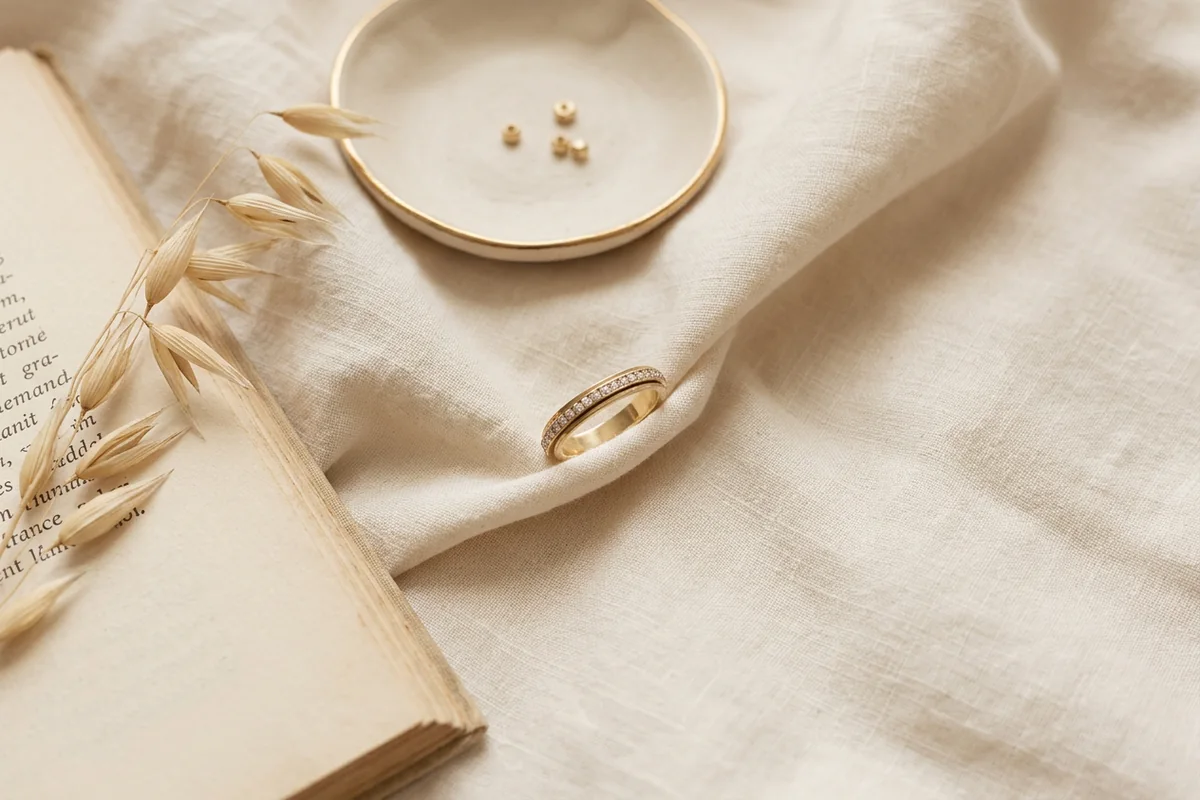
Check price at Stylr →Here's where I have to be careful, because Stylr makes lovely, affordable jewelry and I don't want to oversell it for this specific use case. Stylr's hypoallergenic range is built on 18k gold PVD over a 316L surgical-stainless-steel base — the same steel grade used in piercing posts — and the pieces are designed so there's "no base metal to expose" as the finish ages. For the huge population of people who say they have "sensitive skin" but have never had an allergy test, that's genuinely a sweet spot: 316L is on the AAD's safe-metals list, it's well tolerated, and Stylr's pieces run roughly $36–$56 with real stones and a 1-year warranty. The Twinkling Eternity Fidget Ring ($48) is a nice everyday example.
But this guide is about a confirmed nickel allergy, so I'm going to say the quiet part out loud: 316L is nickel-safe, not nickel-free. It contains about 10–14% nickel, bound in the alloy and released at very low levels — which is exactly why it's fine for most sensitive skin and not what I'd choose if you've been diagnosed or if surgical steel has burned you before. That's why Stylr lands at #3 here and not at the top: it's the best value pick for most readers, but a confirmed allergy belongs in the titanium, niobium or solid-gold picks above and below. Buy it for everyday wear if you're mildly sensitive; reach for titanium if you actually react.
- Pros: 316L surgical steel (AAD-listed safe metal); affordable; broad selection; PVD finish so no base metal is exposed as it wears; waterproof and tarnish-resistant.
- Cons: contains bound nickel (low-release, not nickel-free) — not the pick for a confirmed allergy; gold tone is a coating.
4. Mejuri — best premium nickel-free (solid yellow gold)
Mejuri Solid 14k Yellow Gold
Best premium nickel-free. Solid yellow gold is inherently nickel-free and never wears through to a base metal. The catch is price — and that solid WHITE gold can contain nickel, so buy yellow gold here, not white.
Check price at Mejuri →If you want jewelry that's nickel-free and a forever piece, solid gold is the answer and Mejuri is the cleanest mainstream place to buy it. Its solid pieces are "handcrafted 14k gold," made from 94% recycled gold, "never brass or steel." Solid 14k yellow gold is a noble-metal alloy — gold mixed with copper and silver, not nickel — so it's inherently nickel-free, and because it's solid, there's no plating to wear through and expose a base metal. Solid yellow-gold studs start around $68 and climb from there.
Two materials-science caveats I'd be doing you a disservice to skip. First, price: solid gold is the most expensive route here by a wide margin. Second — and this trips up allergic shoppers constantly — solid white gold is frequently alloyed with nickel as the whitening agent, then rhodium-plated to mask it; when that rhodium wears, the nickel can reach your skin. So if you're allergic, buy yellow gold (or white gold explicitly alloyed with palladium/platinum), not standard white gold. Bought correctly, solid gold is the most beautiful nickel-free option on this page.
- Pros: solid 14k yellow gold is inherently nickel-free; no coating to wear through; recycled sourcing; beautiful, lasting designs.
- Cons: by far the priciest option; standard solid white gold can contain nickel — buy yellow.
5. Studex — best budget starter studs (nickel-safe)
Studex Sensitive Surgical Stainless Steel
Best budget starter. The cheapest credible material here, pre-sterilized and trusted by piercers for decades. Same honest caveat as any surgical steel: low-release nickel-safe, not nickel-free — fine for most, not for a confirmed allergy.
Check price at Studex →Studex is the brand behind a huge share of the world's ear piercings, and its "Sensitive" line is the cheapest credible material on this page: pre-sterilized 316L surgical stainless steel studs for around $10. I'm including it precisely because it's honest about what it is — the brand states outright that "just like any other steel, this steel contains nickel," and that its safety comes from a release rate "well below" the EU's 0.2 µg/cm²/week limit. In other words, it's the same nickel-safe (not nickel-free) story as Stylr, in a no-frills, ready-to-wear stud.
For most "my ears get a little irritated by cheap earrings" shoppers on a tight budget, that's plenty. But the same line applies as with any 316L: if you have a diagnosed nickel allergy, surgical steel is the wrong shelf — go to titanium. (Worth knowing: Studex does also use grade-23 titanium for some piercing studs, which is nickel-free; if you're buying for a fresh piercing on reactive skin, ask for the titanium option specifically.)
- Pros: cheapest credible option; pre-sterilized; trusted in the piercing trade for decades; a titanium option exists for piercings.
- Cons: the "Sensitive" steel line is nickel-safe, not nickel-free; basic styling.
6. Pavoi — best budget gold look, with a plating caveat
Pavoi 14k Gold-Plated
Best budget gold look, with a caveat. Affordable and the brand markets it as nickel-free, but it is plated over a base metal — once a thin layer wears at a high-friction spot, you are relying on the base. The sterling-silver base versions are the safer bet for reactive skin.
Check price at Pavoi →Pavoi is the affordable gold-look brand everyone's seen on Amazon, and it does claim the right things: "all our jewelry is nickel, lead and cadmium-free." For a lot of mildly sensitive people it works fine, and the prices are hard to argue with — Round Drop Huggies are $15.45. So why is it last? Because it's 14k gold plated over a base metal (brass, or sterling silver on some lines), and plating is finite. The brand itself says the gold "is likely to oxidize when exposed to water, sweat, perfumes" and recommends taking it off before swimming or workouts. Once that thin layer thins at a high-friction point — an earring post, the inside of a ring — you're relying on whatever's underneath.
If you go this route with reactive skin, my materials-science advice is to choose Pavoi's sterling-silver-based pieces over the brass-based ones (the brand notes the silver base is "nickel, lead, and cadmium free"), and treat them as gentle-wear, not gym-and-shower jewelry. For a confirmed allergy, though, I'd still pick a solid or pure-metal option above — a plated piece is only as nickel-free as its base metal once the coating gives way.
- Pros: very affordable; brand markets it as nickel/lead/cadmium-free; broad trendy selection; sterling-silver-base options exist.
- Cons: gold is plated, so the finish is finite; brand says to remove before water; once plating wears you're trusting the base metal.
How to choose truly nickel-free jewelry
The whole game is matching the metal to how reactive you actually are. Here's the materials-science version, kept short.
The genuinely nickel-free metals are pure metals and high-karat yellow gold. Implant-grade titanium, niobium, platinum, and solid 14k+ yellow gold contain no nickel to release. Niobium deserves a special mention: because it's a pure metal (not an alloy), it's always nickel-free, and it's biologically inert — the same class of biocompatible metal used in medical implants. Brands like Nickel Smart even put a lifetime guarantee on their niobium and titanium "never to test positive for nickel." If you're severely allergic, these are your shelf.
316L surgical steel is nickel-safe, not nickel-free — and that distinction is the point. Its corrosion resistance comes from a self-repairing chromium-oxide passive film, which is also what keeps its 10–14% nickel locked in and releasing slowly. Peer-reviewed work on 316L describes how that passive oxide film re-passivates to suppress pitting — the same chemistry that makes the nickel release low enough to clear the EU limit. Excellent for most people; not for a confirmed allergy.
Plated and white-gold pieces are where "allergy-safe" buys go wrong. Gold-plated jewelry is only nickel-free until the coating wears and exposes the base metal underneath. And solid white gold is commonly alloyed with nickel and rhodium-plated to hide it — when the rhodium wears, the nickel reaches skin. If you're allergic, prefer solid yellow gold, or a white gold the jeweler confirms is alloyed with palladium or platinum.
Know the words on the label. "Hypoallergenic" is unregulated marketing — it can sit on plated brass. The U.S. FTC defines the real material terms ("vermeil," "gold-filled," "gold-plated") in 16 CFR Part 23, but none of those describe a base metal's nickel content. The only sentence that protects an allergic shopper is a named, nickel-free material — titanium, niobium, solid yellow gold — not an adjective.
Frequently asked questions
Nickel-free means the metal contains no nickel at all — like pure titanium, niobium, platinum, or solid yellow gold. Nickel-safe (often labeled "hypoallergenic") means the metal does contain nickel but releases it slowly, the way 316L surgical stainless steel does. For most mildly sensitive skin, nickel-safe is fine; for a confirmed, diagnosed nickel allergy, you want genuinely nickel-free metals.
No. 316L surgical stainless steel contains roughly 10–14% nickel, bound in the alloy. It is "nickel-safe" because it releases very little nickel — below the EU limit of 0.2 micrograms per square centimeter per week — and it sits on the American Academy of Dermatology's list of safer metals. But it is not nickel-free, so someone with a confirmed, severe nickel allergy should choose implant-grade titanium, niobium, or solid yellow gold instead.
Pure titanium (ideally implant-grade), niobium, platinum, and solid 14-karat-or-higher yellow gold are genuinely nickel-free, because there is no nickel in them to react to. Niobium and titanium are also biologically inert and used in medical implants. Avoid solid white gold unless it is specifically alloyed with palladium or platinum, since standard white gold is often whitened with nickel.
Usually because the piece is plated, not solid. A thin layer of gold sits over a base metal — often brass or a nickel-bearing alloy — and once that layer wears at a high-friction spot like an earring post, your skin contacts the base metal underneath. "Hypoallergenic" is an unregulated marketing word that can appear on plated base metals, so it is not a reliable signal. For reactive skin, choose a named nickel-free metal rather than anything described only as "gold-plated" or "hypoallergenic."
Both are excellent and genuinely nickel-free, so either is a safe choice for a confirmed allergy. Implant-grade titanium is lightweight, extremely strong, and widely available in fashion styles. Niobium is a pure, biologically inert metal that takes beautiful anodized colors and is always nickel-free. If you want a named medical standard or the widest design selection, titanium usually wins; if you want vivid color without any coating, niobium is hard to beat.
This guide is part of my complete guide to everyday jewelry that survives real life. Most people shopping for nickel-free jewelry start with earrings, since pierced ears react first — see my dedicated guide to the best hypoallergenic earrings for sensitive ears. And if you also want pieces you can shower in, here are the best waterproof jewelry brands and the most affordable gold-tone jewelry that won't tarnish.