

Affiliate disclosure: This post contains affiliate links. If you buy through them, I may earn a small commission — at no extra cost to you. I only recommend products I'd point a friend to, and my editorial opinions are my own. Full disclosure here.
Here's the unglamorous truth I wish someone had handed me with my first pump: most pumping pain — and most "my pump barely pulls anything" complaints — aren't a broken pump or a low supply. They're a flange that doesn't fit. In my old life as a cosmetic chemist I obsessed over how a thing meets skin — the seal, the pressure, the friction — and a breast pump is the same problem in a different package. The part that touches you, the flange (also called the breast shield), has to fit a measurement, not a guess. This guide covers what a flange is, why fit drives comfort and output, how to measure for breast pump flange size, common sizes, the signs your shield is wrong, and inserts vs. shields. The method is simple; skipping it costs people weeks of sore sessions.
Key Takeaways
- Flange size is about your nipple, not your bra size: you size the breast shield to the diameter of your nipple, so two people with very different chests can need the same flange.
- Fit drives comfort and output: a shield that's too big rubs and pulls in areola; one that's too small pinches the nipple. Both hurt and both can reduce how much milk you express.
- Measure, don't guess: measure your nipple's diameter at the base (just the nipple, not the areola), then match it to your pump's chart — usually adding a millimetre or two of wiggle room.
- The FDA's own advice: make sure the "breast-shield opening is the correct size" so you can comfortably center your nipple — and check before buying whether the pump offers other sizes.
- Shipped-with-one-size is the norm: the FDA notes "many pumps are sold with one size of breast-shield", so confirm inserts or alternate shields exist for your model — the Momcozy M6, for instance, lists a 24 mm flange.
What is a flange (breast shield)?
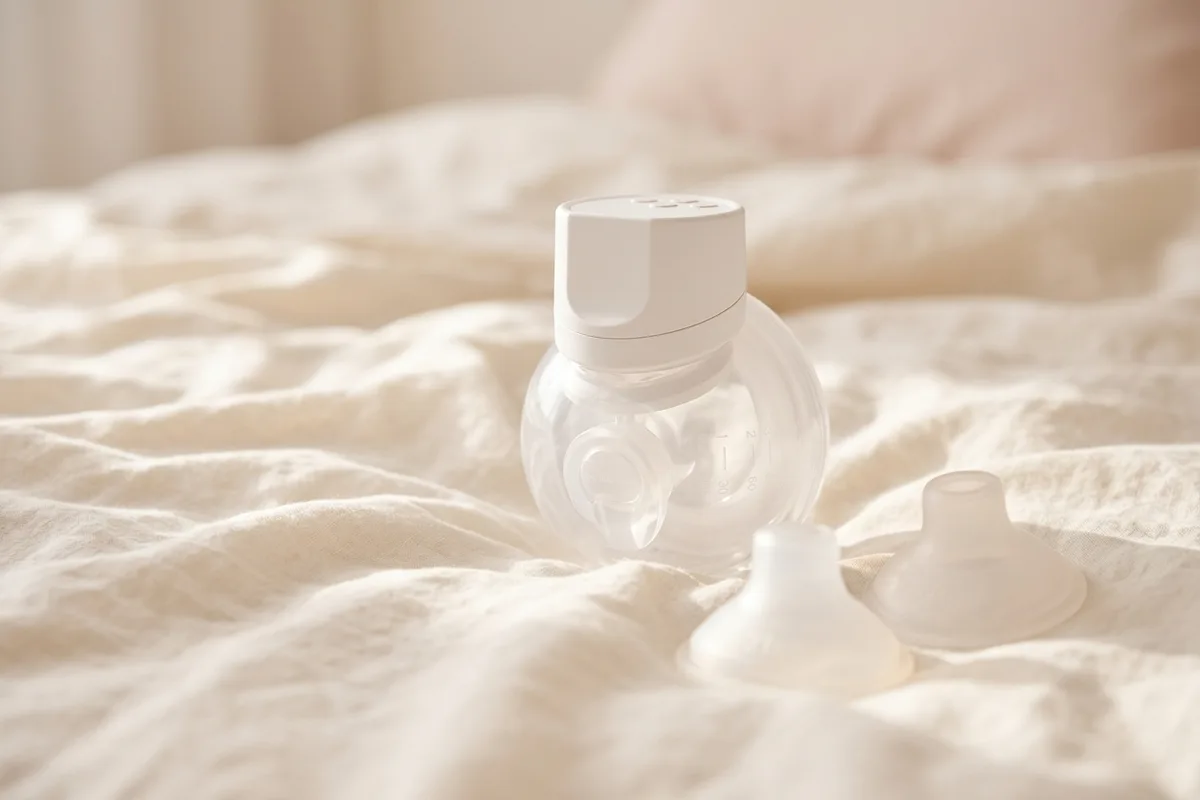
The flange — manufacturers and the FDA usually call it the breast shield — is the funnel-shaped cup that sits against your breast during pumping. Your nipple goes into its central tunnel, and the pump's vacuum cycles air to draw the nipple gently in and out, triggering letdown and expressing milk. It's the single interface between your body and the machine: every spec on the box — suction, modes, levels — is delivered through this one part. Get the flange wrong and a brilliant pump performs like a broken one.
The number printed on a flange (such as 24 mm) is the diameter of the tunnel opening — the hole your nipple passes through — in millimetres. It is not the width of the cup or anything to do with your breast volume. That trips up almost everyone at first, so plainly: flange size measures the tunnel, and it's sized to your nipple.
Why fit drives comfort and output
The vacuum needs your nipple to move freely in and out of the tunnel. If the tunnel is too wide, it pulls in the surrounding areola — that extra tissue rubs the plastic and chafes, and it can blunt the vacuum's effect on the nipple, so you express less. If the tunnel is too narrow, the nipple swells against the walls, gets pinched at the sides, and the friction both hurts and restricts flow. A wrong size in either direction tends to produce the same two complaints: pain and disappointing output. People blame the pump or their body; usually it's the geometry.
That's why fit is make-or-break on wearable pumps especially. A traditional pump lets you hold the flange at a helpful angle; a wearable's cup sits at a fixed angle inside your bra, so you can't fudge a marginal size with positioning — the wrong shield shows up faster. (Weighing wearables in general? I go deep in our pick of the best wearable breast pumps.)
How to measure for breast pump flange size
You're measuring the diameter of your nipple across its widest point — just the nipple, not the darker areola. Here's the method, in the spirit of measure twice and buy once:
- Measure at rest, then again right after a pump or feed. Nipples swell and stretch with pumping, so take a baseline and a post-stimulation reading; many people size up slightly once they account for the swell.
- Use a millimetre ruler, measuring tape, or a printable sizing tool. Lay it across the base of the nipple, where it meets the breast, and read the diameter straight across — only the protruding nipple, excluding the areola.
- Measure both sides. Your two nipples often differ by a millimetre or two, and you can run two different flange sizes — one per side — if that's what fits.
- Add a little room, then check the chart. Because the nipple needs to move freely (not seal tightly against the walls), most manufacturers tell you to add roughly a millimetre or two and round to the nearest size they offer. The add-on and size steps differ by brand, so take your measurement to your pump's own sizing chart, not to a one-size number from a blog.
I'm deliberately not handing you a "your-mm-equals-this-size" table: charts vary between manufacturers, and a number right for one brand's flange geometry can be wrong for another's. Measure carefully, match against the chart for your specific pump, and if a brand doesn't publish a clear way to find your fit, treat that as a small red flag.
Common flange sizes (and why "standard" isn't universal)
The default most pumps use sits in the low-to-mid 20s of millimetres — the Momcozy M6, for example, lists a 24 mm flange as its included size — and many wearables, as the FDA notes, ship with just that one size. But "standard" is a manufacturing convenience, not a statement about bodies: real nipples span a wide range above and below that default, which is exactly why brands sell alternate shields and inserts separately. So don't assume the included size is your size, and — the FDA's point too — before you buy, confirm the model offers your size. The agency advises you to "check the manufacturer's website to see if you can replace the breast-shields with a different size or texture" in case the ones sold with the pump are uncomfortable. A pump you love on paper is the wrong pump if it can't fit you.
Signs your flange is the wrong size
Your body gives legible feedback once you know what to read. Don't dismiss any of this as "pumping just hurts" — comfortable, effective pumping is the goal, and pain is information.
- Pain during or after pumping — sharp pinching, a burning rub, or tender, cracked or sore nipples afterward. Pumping can feel like a firm tug, but it should not be painful.
- Visible rubbing or a chafe ring, with a lot of areola pulled into the tunnel and dragging the walls — usually a shield that's too large.
- The nipple turns white or blanches after a session — restricted blood flow, often from a tunnel that's too tight.
- The nipple visibly squeezed against the sides (too small) or areola dragged in (too big). The nipple should move freely with a little space around it.
- Low or dropping output despite decent suction. When the vacuum fights bad geometry, milk transfer suffers — a poor flange seal is a frequent, overlooked culprit.
Hitting several of these? Change the cheapest variable — the flange size — before you blame the pump or your supply. If soreness has set in, simple comfort measures help while you re-fit: warmth before a session can encourage letdown, cold after can calm engorgement. Momcozy's hot & cold breast pads are a low-cost option for that relief — a comfort aid, not a substitute for correcting the fit.
Inserts vs. shields: what's the difference?
Once you know your size, you have two ways to reach it. A different breast shield is a whole replacement flange in another diameter — you swap the entire cup for a wider or narrower tunnel. A flange insert (or fit insert) is a small ring or sleeve that drops into an existing shield to shrink its tunnel a few millimetres, so a 24 mm shield with a smaller insert effectively becomes a smaller opening. Inserts are a tidy way to size down from a standard flange without buying a separate cup, handy for wearables built around one cup. If you need to go larger, or your size is far from the included one, you generally need a different shield. Either way the buying check is the same — does the manufacturer offer the size or insert you need for your model?
A wearable that makes sizing easier to get right
Sizing matters most on a wearable, so start with a model that's transparent about its flange and offers a way to adjust the fit — not one that hides the spec. Two Momcozy wearables fit that brief. The figures below are Momcozy's stated specs from its own product pages; the ratings are my honest editorial opinion, not customer data, and I'm an independent reviewer here, not part of Momcozy's product team. Whichever you pick, measure first and confirm your shield size is available.

Momcozy M5 Smart
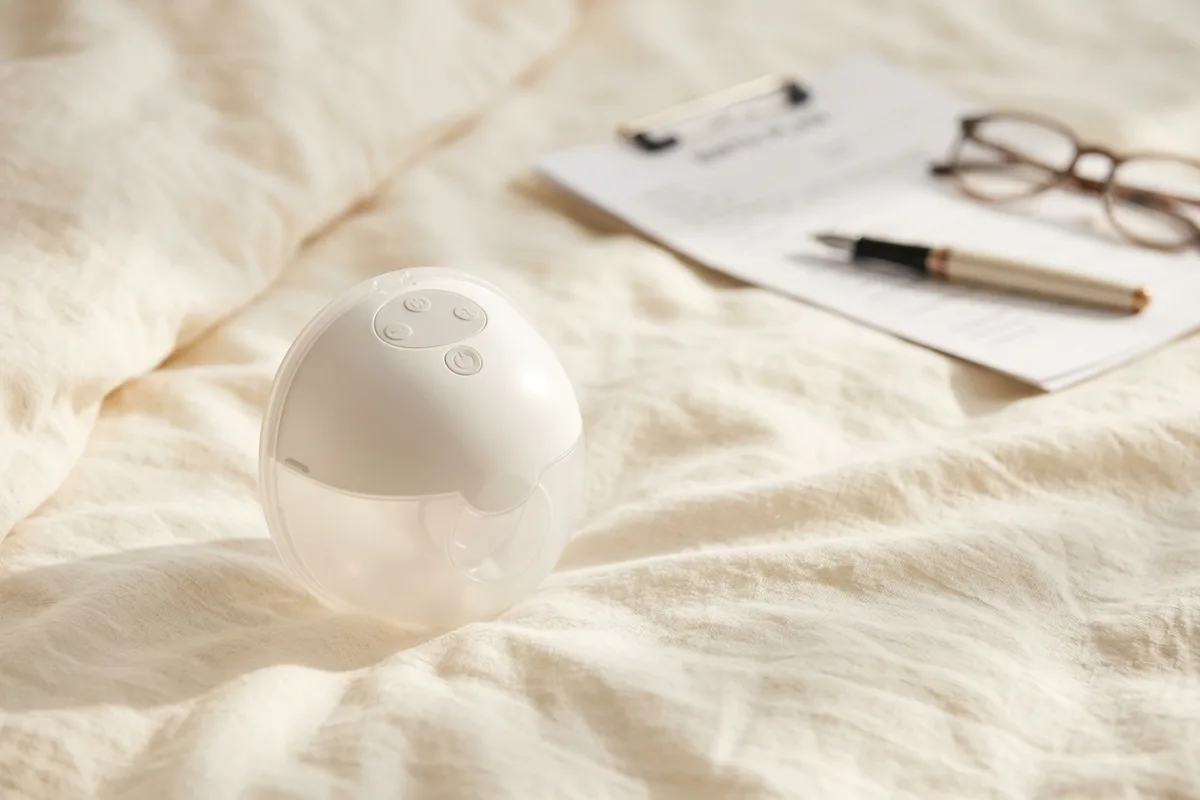
My everyday wearable pick, and a sensible one for fit-fussy pumpers: app control to adjust without fishing it out of your bra, plus a two-piece cup designed to help adapt the seal. Momcozy-stated 285 mmHg, 3 modes, 9 levels, ~6 sessions, under 48 dB.
Check price at Momcozy →
Momcozy Mobile Style M6
The slim wearable that prints its included flange (24 mm) right on the spec sheet, so you can check it against your measurement before buying. Momcozy-stated -285 to -300 mmHg, 3 modes, 9 levels, ~5–6 sessions, under 50 dB.
Check price at Momcozy →The M5 Smart is my default for most parents — the app adjusts on the fly and the two-piece cup is built to help adapt the fit. The Mobile Style M6 earns its place for a sizing-specific reason: it lists its 24 mm flange openly, so you can confirm that's your size (or that an alternate shield or insert exists) before you buy, instead of discovering a mismatch after. Neither is a magic fix — a pump is only as comfortable as the flange you put in it, which is why measuring comes first. For how to pick a pump in the first place, start with our complete breast pump buying guide.
Frequently asked questions
Measure the diameter of your nipple across its widest point — just the nipple, not the areola — in millimetres, laying a ruler or printable sizing tool across the base of the nipple. Measure both at rest and shortly after pumping, since nipples swell. Then take that number to your pump's own sizing chart: most brands say to add a millimetre or two and round to the nearest size they offer. Charts differ by manufacturer, so match against the one for your specific pump.
No. Flange size is sized to the diameter of your nipple, not your breast volume or bra size. The number printed on a flange (such as 24 mm) is the diameter of the central tunnel your nipple passes through, so two people with very different chests can need the same flange — and your own two nipples may need different sizes. Always size to the nipple measurement, not the cup.
Common signs are pain (pinching, burning, or sore, cracked nipples), a lot of areola pulled into the tunnel and rubbing, the nipple blanching white after a session, the nipple squeezed against the tunnel sides, and low or dropping output despite reasonable suction. A shield that's too large tends to rub and pull in areola; one that's too small tends to pinch — and both can reduce output. Re-measuring and changing the flange size is usually the first fix to try.
Many pumps use a default in the low-to-mid 20s of millimetres — the Momcozy M6, for instance, lists a 24 mm flange as its included size — and the FDA notes many pumps are sold with just one size of breast-shield. But "standard" is a manufacturing default, not a guarantee it fits you. Nipple sizes vary widely, so plenty of people need a smaller or larger flange than the one in the box. Measure first, and before buying confirm the model offers your size or an insert.
A different breast shield is a whole replacement flange in another tunnel diameter — you swap the entire cup. A flange insert is a small ring or sleeve that drops into an existing shield to shrink its tunnel by a few millimetres. Inserts are an easy way to size down modestly from a standard flange, especially on wearables built around one cup. If you need to go larger, or your size is far from the included one, you generally need a different shield. Either way, check your pump's manufacturer offers the size or insert you need.
Yes. The vacuum needs your nipple to move freely in the tunnel. A shield that's too wide pulls in areola and can blunt the vacuum on the nipple; one that's too narrow pinches and restricts flow — so a poor fit can lower output in either direction, not just cause discomfort. Before concluding you have a low supply or a weak pump, re-measure and correct the flange size, because the wrong shield is one of the most common and overlooked reasons pumping output disappoints.
Flange sizing is the cheapest, highest-leverage fix in all of pumping: a few millimetres, measured properly, is the difference between dreading every session and barely noticing it. Once you've got your size, the rest of the decision — wearable vs. traditional, suction, battery, cost — is covered in our complete breast pump buying guide, and if you're going cordless, see our pick of the best wearable breast pumps or my hands-on Momcozy review (several models bundle multiple flange sizes). Once you're expressing well, store it safely with the milk storage guidelines.